From participatory mapping to proposing real solutions, 64 international students gather to answer one crucial question: “What kind of city do you want to live in?”
Imagine 7 groups of teenagers from completely different worlds sitting around a table. Some of them are from Mombasa, Kenya, others from Dublin and Tramore, Ireland; some from Warsaw, Poland, and next to them are students from Lanciano, Italy, and from Bilbao and Zaragoza, Spain. They speak different languages, live very different lives, but they all share one big dream: to build a better, fairer city, finding answers to the question “What kind of city would you want to live in?”.
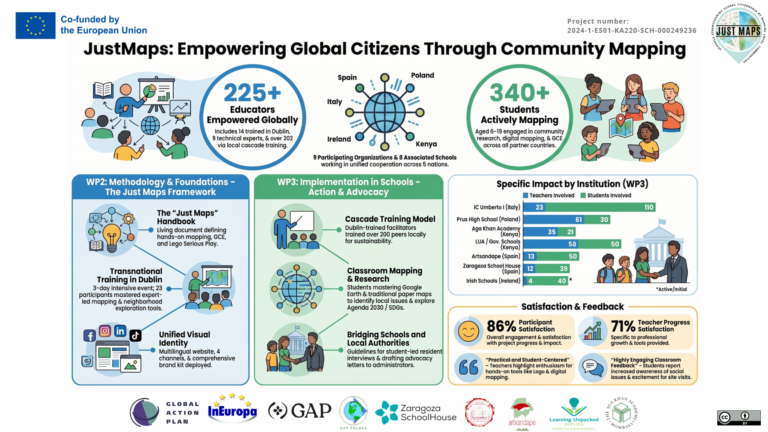
This magic happened in Zaragoza from October 20th to 22nd, during the international meeting of the Just Maps project, when 64 students from 7 schools in 5 countries (Italy, Spain and the Basque Country, Ireland, Poland and Kenya) met together with their teachers and the facilitators from organizations belonging to the GAPI network (InEuropa Italy, GAP Spain, GAP Ireland, GAP Poland and LUA Kenya). For these young people, it was the moment their work finally came together.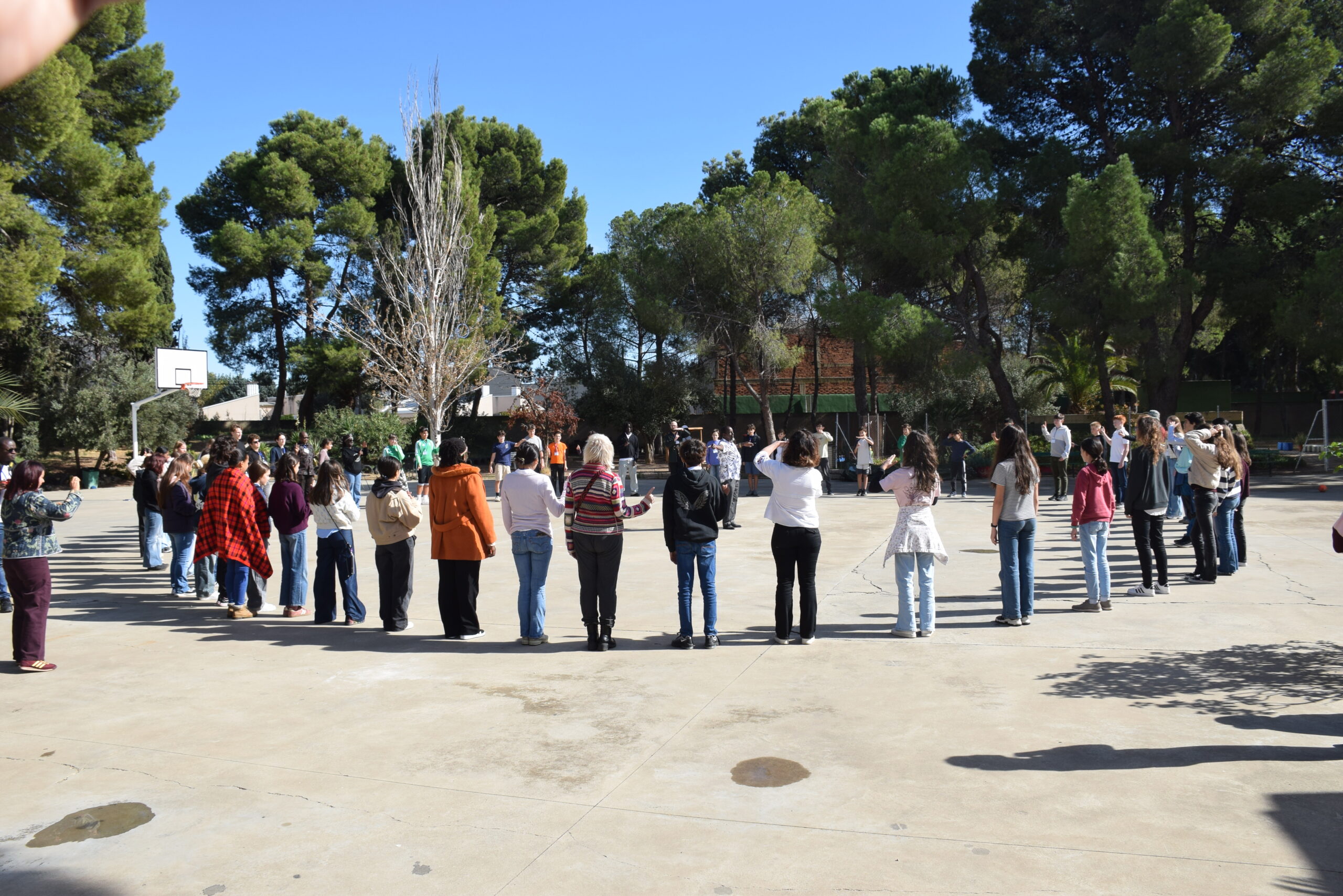
Just Maps is an Erasmus+ project built on a simple idea: young people are not only future citizens, but they are also citizens today. The project started two years ago. Since then, teachers have been trained in participatory mapping and guided by the GAPI organisations, have helped their students become real urban explorers. Each school chose an area in their own city, and the students launched their own investigation: field mapping, observation, interviews with residents and local administrators, and analysis of the environment, safety, clean streets and accessibility, that’s how easy it is for everyone— particularly for kids, the elderly, or people with disabilities—to live there and move around. Step by step, they turned their research into maps, on paper and/or in digital form, ready to be shared in Zaragoza.
Zaragoza marked the turning point: after finding the problems, it was time to imagine the solutions. The meeting aimed to help students connect the problems of their own streets with global challenges such as climate change and inequality, to make them feel part of a bigger human family, and to give them the confidence to propose concrete ideas, discovering that adults really want to listen. For the teachers, it was a chance to try new, practical methods to help their students grow as active global citizens.
 Turning 64 teenagers from 2 continents into one team in just three days was not easy. The work was guided by the GAP partner organisations, coordinated by InEuropa, and their facilitators were the real engine of the event. They led every session with professionalism, but also with passion and heart, changing the rhythm when needed like a well-tuned orchestra, creating a crescendo of activities that kept the students engaged and drove them straight toward the event’s ambitious goals. Each day started with icebreakers and energizers full of movement and laughter, and in a few minutes shy faces became smiling faces. Around this playful energy came serious work: open discussions, honest sharing of ideas, real listening. Healthy fun was exactly what made the hard work possible, and the enthusiasm was so contagious that it reached the teachers too, who stood back watching with surprise and pride, their students working together so easily sharing ideas and proposing real, concrete solutions for their hometowns.
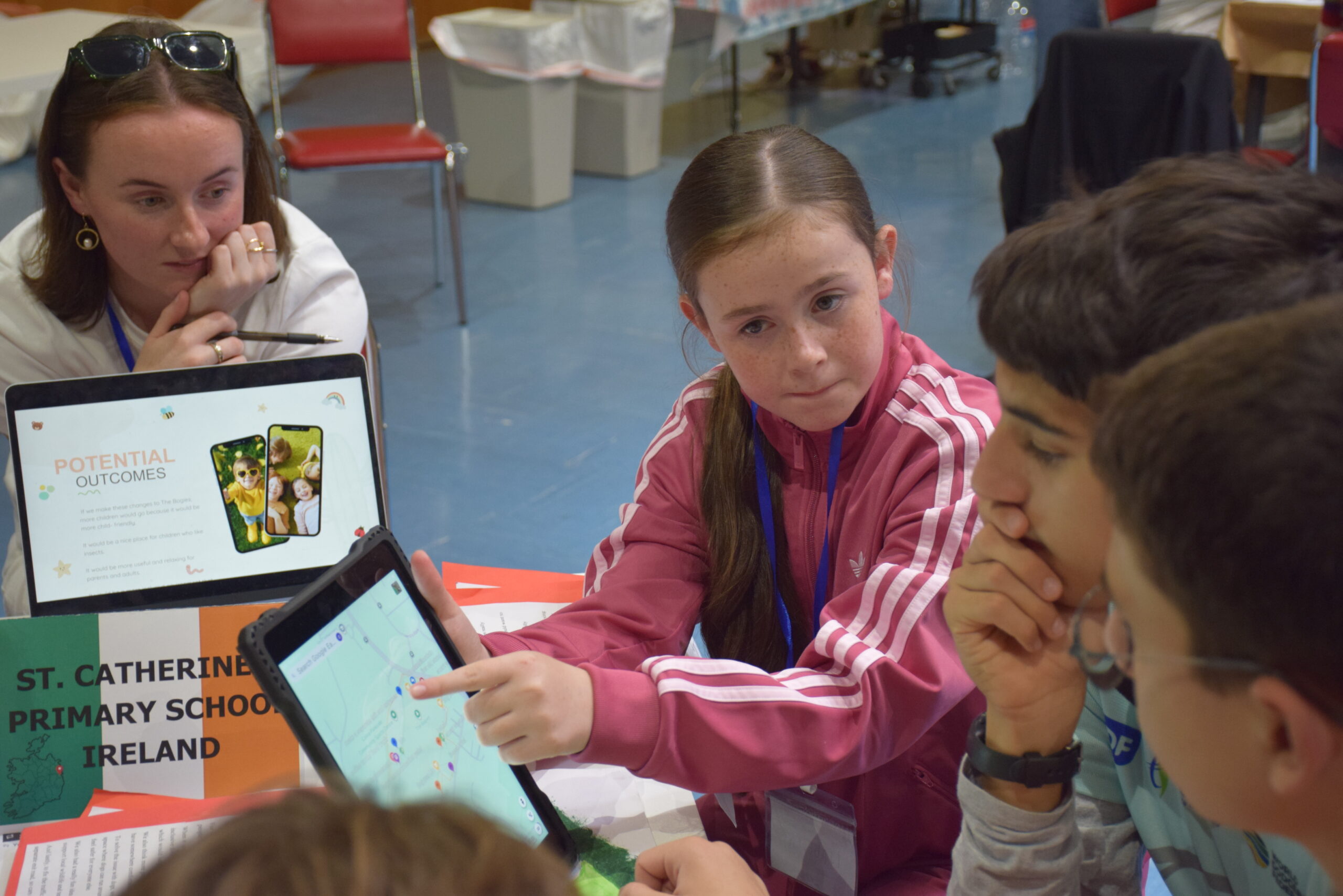 The true heartbeat of this workshop was a peer-to-peer exchange. On the first day, every school group presented the digital maps they had built using Google Earth or paper maps. They proudly showed their cities’ strengths and bravely pointed out the weaknesses. European students listened carefully as their Kenyan peers explained that unsafe streets, missing street lights and broken roads are daily challenges for them, and at the same time everyone discovered how many concerns they share. A problem in one neighbourhood, they realised, is often a problem to be found all over the world.
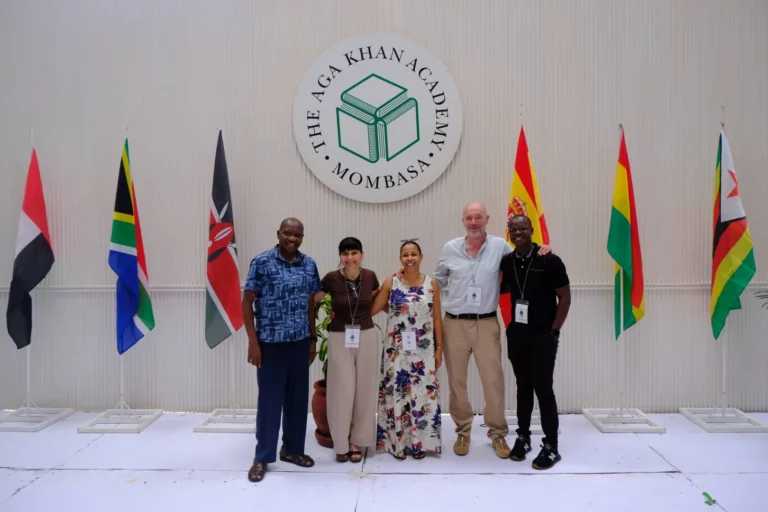
Sharing traditions and national cultures made the distances shorter and working together easier and more immediate. One story conquered the room, when our Kenyan friends explained the colours of their flag: red for the blood shed for freedom, black for the colour of the people’s skin, green for nature and the land. Many European students were surprised and moved and said they would tell this story to their friends back home. In that moment, a flag became a bridge between continents.
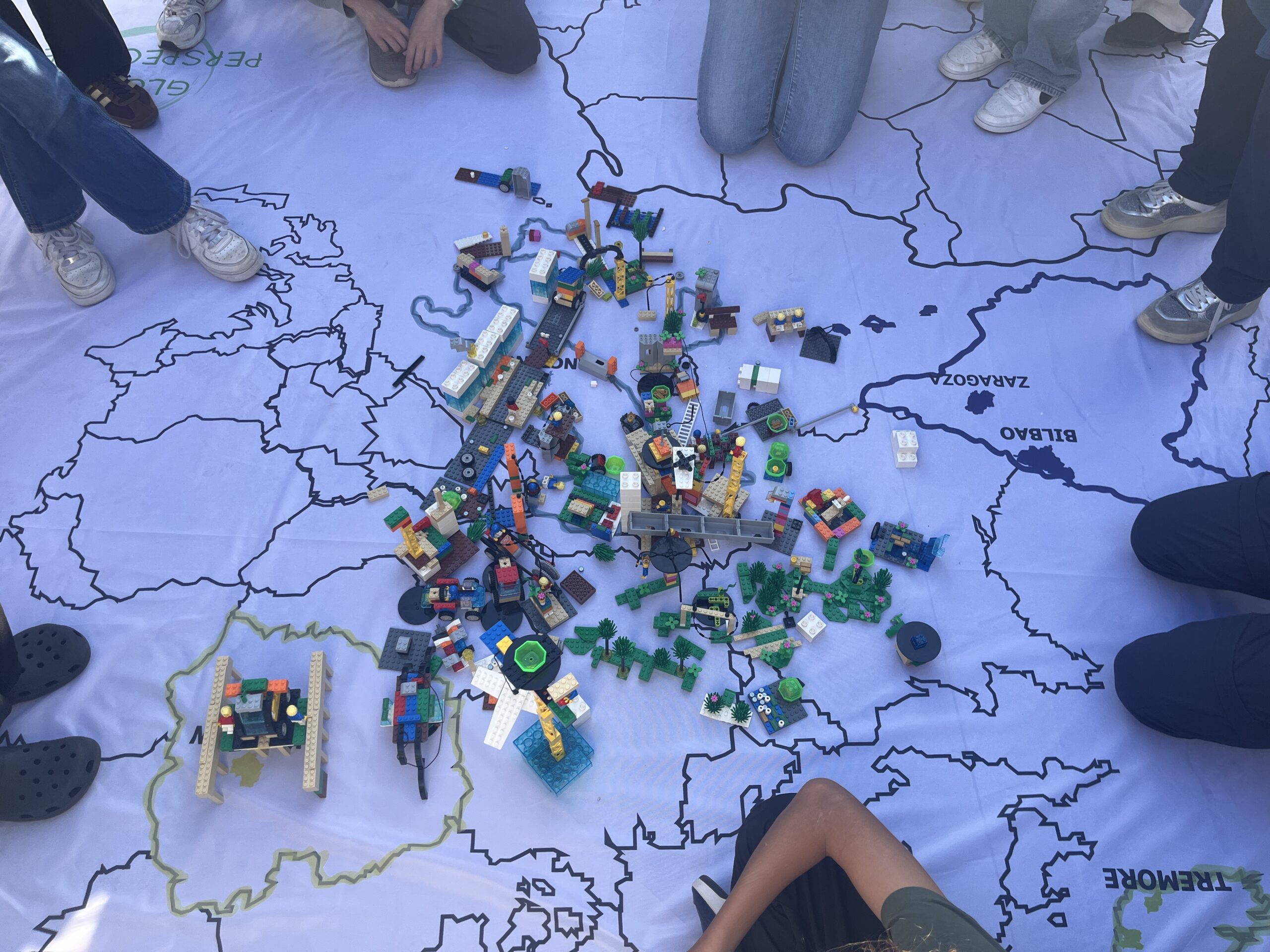
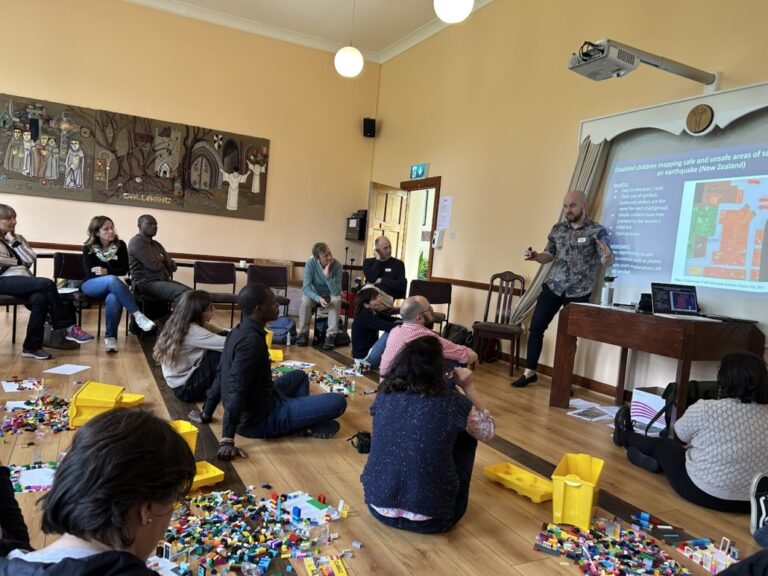
 On the second day the students left the classroom. In national groups they explored the streets of Zaragoza, observing squares and parks and talking with residents about life in their city. Back indoors, they turned these observations into solutions with LEGO® SERIOUS PLAY®, building their ideas first individually and then together in shared models. The bricks broke down every barrier: when English was not enough, a smile, a gesture or a brick did the job. The students said it was beautiful and much easier than expected to work with peers from other countries, and many were amazed at how quickly a group of strangers could build better scenarios for their cities.
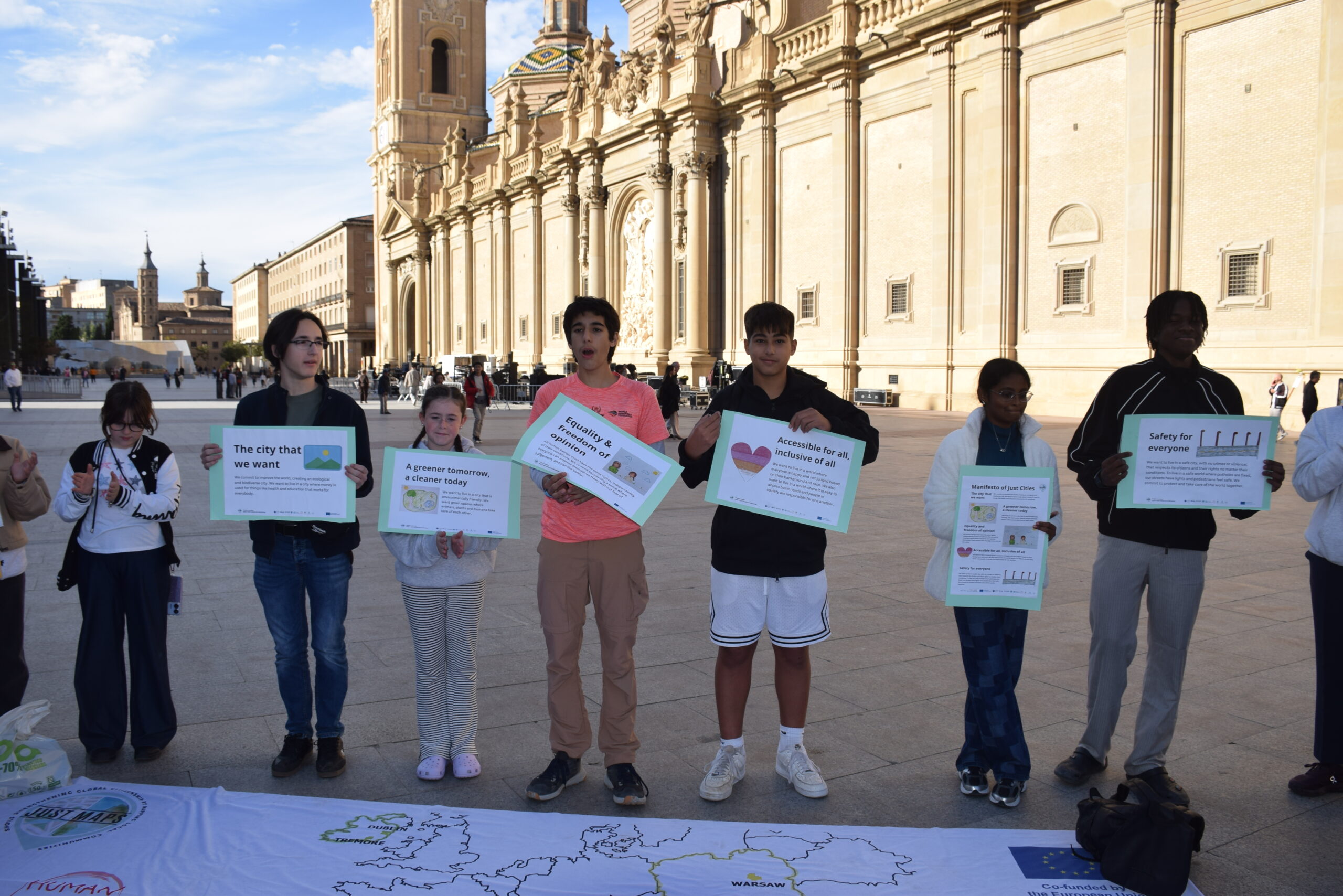
 All this led to the third day, when the whole group, acting as the “Council of Just Mappers”, used maps, observations, models and emotions to write the Manifesto of Just Cities. In a surprisingly short time they agreed on what really matters: ecological, biodiverse cities with health and education systems that work for everybody; shared green spaces where humans, plants and animals take care of each other; equal rights for all and the freedom to speak without fear of judgement; inclusive communities with no discrimination based on race or background, where basic needs are within everyone’s reach; and safe streets, free from crime and violence, with proper lighting, fixed potholes and safe for pedestrians. Then, full of emotion and civic pride, the students walked to Plaza del Pilar, the heart of Zaragoza, and read their Manifesto aloud to the city: young voices from two continents, speaking as one.

The closing ceremony was perhaps the most intense moment of all. Our Kenyan friends gave every participant a handmade gift (a necklace, a bracelet or a pair of earrings) chosen and personalised for each person. It was a celebration of the beauty of the work done together, a reminder that every single person in the room mattered, and a thank-you to a whole team that had worked well and intensely. There were hugs, smiles and a few tears too were shed. The students left Zaragoza with much more than memories: list of solutions and their Manifesto of Just Cities. They also took home new friendships, a new respect for the places where they live and a sharper eye for the details of their own streets.
 And the journey continues: with the support of the national GAPI organisations, each school will translate the Manifesto into its own language and create new digital maps focused on solutions, before launching, in 2027, an advocacy campaign to involve communities, schools and local administrators.

We hope this experience has left a mark on every young person who took part, and that they will share it with their classmates, families and communities as active and global citizens. Because, as Zaragoza showed us, the city of the future is built together.